
Sand and gravel washing is designed to produce cleaner, higher-quality aggregate, but the washing process also creates a challenge: what happens to the fine material carried away with the process water?
For many aggregate producers, that material ultimately ends up in a settling pond. While ponds have long been a common part of wash plant operations, sending valuable fines directly to a pond can mean more solids to manage, more frequent pond maintenance, and potentially less recoverable material making it into the final product stream.
At Southern Machinery Company, we look at fines recovery as part of the complete material processing circuit. A properly designed fines recovery system can help producers capture material that might otherwise be lost, reduce the amount of solids reaching settling ponds, and improve overall wash plant efficiency.
What Is Being Lost in Your Wash Water?
After sand and aggregate are washed, process water can carry suspended fine particles away from the primary washing equipment. Depending on the feed material and plant configuration, some of those particles may still have value.
Without a method for recovering them, fines can travel with the wastewater into settling ponds or downstream water-management equipment.
Over thousands of tons of production, even relatively small material losses can add up.
This is why evaluating a wash plant should involve more than looking at whether the finished aggregate is clean. Producers should also consider where material is traveling throughout the entire circuit and whether potentially usable solids are being unnecessarily discarded.
How Fines Recovery Fits Into an Aggregate Wash Plant
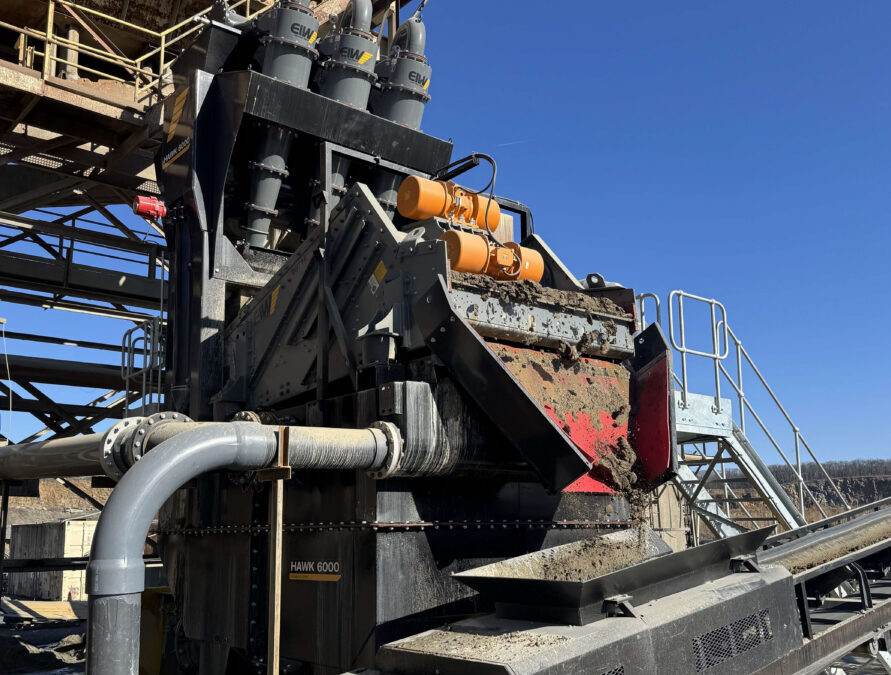
Fines recovery equipment is designed to separate fine solids from the water stream and return usable material to a manageable product.
A typical fines recovery circuit may incorporate equipment such as:
- A collection sump
- Slurry pump
- Hydrocyclones
- Dewatering screen
The slurry containing water and fine particles is collected and pumped to the hydrocyclones, where centrifugal forces separate a portion of the solids from the water.
Recovered material can then be discharged onto a dewatering screen. The screen removes additional moisture, producing a material that is considerably easier to convey, stockpile, handle, or potentially incorporate into a finished product.
Rather than viewing the wash-water stream strictly as waste, fines recovery gives aggregate producers an opportunity to evaluate whether part of that stream can be retained and put to productive use.
Recover More of the Material You Already Processed
Every ton of material entering an aggregate plant represents costs associated with extraction, handling, crushing, screening, conveying, and washing.
When usable fine material is carried out with process water, the operation has already invested resources into processing material that may never become part of a saleable product.
Fines recovery can provide an opportunity to capture a portion of those solids before they reach the settling pond.
Depending on the characteristics of the recovered material and the needs of the operation, recovered fines may potentially be blended into another product, stockpiled for another application, used as backfill, or utilized in site reclamation.
The suitability and value of recovered fines will vary by application, but understanding what is being lost is an important first step toward improving overall material recovery.
Reduce the Burden on Settling Ponds
Settling ponds can require a significant amount of space and ongoing maintenance.
As solids accumulate, pond capacity decreases. Eventually, accumulated material may need to be excavated or additional water-management measures may be required to maintain sufficient capacity.
Removing more solids before the wastewater reaches the pond can slow that accumulation.
For producers dealing with limited pond space or frequent cleanout requirements, fines recovery can become an important part of a broader tailings and water-management strategy.
The objective is not simply to add another piece of equipment. It is to reduce the amount of material the pond must manage in the first place.
Improve the Efficiency of Downstream Water Management
Many modern aggregate washing plants incorporate additional systems for managing tailings and recycling process water.
When large quantities of suspended solids continue downstream, equipment such as thickeners and filter presses must handle that additional load.
Removing recoverable fines earlier in the process can help prepare the remaining slurry for subsequent treatment.
Depending on the plant design, fines recovery may be used alongside other water-management technologies to create a more complete system for separating solids, managing tailings, and recovering process water.
This is where looking at the entire plant flow becomes especially important. The best solution depends on what the operation is trying to accomplish, how much water and material are being processed, available space, product specifications, and the characteristics of the feed.
Fines Recovery, Thickeners, and Filter Presses Serve Different Roles
Fines recovery is only one part of the larger conversation surrounding aggregate water management.
A fines recovery system is primarily focused on capturing fine material from a slurry stream and dewatering it into a more manageable form.
A thickener performs a different function. It concentrates suspended solids while separating clarified water that can potentially be returned to the plant process.
Filter presses take dewatering further by mechanically separating water from concentrated slurry to create relatively dry filter cakes that can be transported and handled more easily.
Depending on an operation’s goals, these technologies may be used individually or incorporated into the same processing system.
The right configuration depends on factors including production requirements, water availability, settling pond capacity, environmental considerations, site limitations, and the amount and type of fines being generated.
Look at Fines Recovery as a Plant-Wide Decision
Adding fines recovery equipment should not be approached as an isolated equipment purchase.
Before determining the right solution, it is important to understand the existing wash circuit.
Questions worth evaluating include:
- How much fine material is currently reporting to the waste stream?
- What particle sizes are being lost?
- Could recovered material contribute to an existing product?
- How frequently do settling ponds require maintenance?
- Is pond capacity becoming a concern?
- Is water availability limiting production?
- What equipment is already being used for tailings management?
- How would a fines recovery system affect downstream equipment?
- Is there sufficient space and infrastructure for the proposed system?
Answering these questions helps determine not only whether fines recovery makes sense, but also where it should be incorporated into the plant.
Explore Eagle Iron Works Washing and Fines Recovery Equipment
Eagle Iron Works offers a range of equipment designed to help aggregate producers improve washing, classifying, dewatering, and fines recovery throughout their operations. From fines recovery systems and dewatering screens to sand screws and other washing equipment, EIW solutions can be configured around the material, production requirements, and goals of an operation.
Choosing the right equipment starts with understanding what is happening within your current process. Feed characteristics, particle-size distribution, water requirements, production targets, and existing plant equipment can all influence which solution is the best fit.
Southern Machinery Company offers Eagle Iron Works equipment and can help producers evaluate available options for new and existing sand and gravel washing applications.
If you are interested in adding fines recovery equipment or exploring other Eagle Iron Works washing solutions for your operation, contact Southern Machinery Company to learn more.