
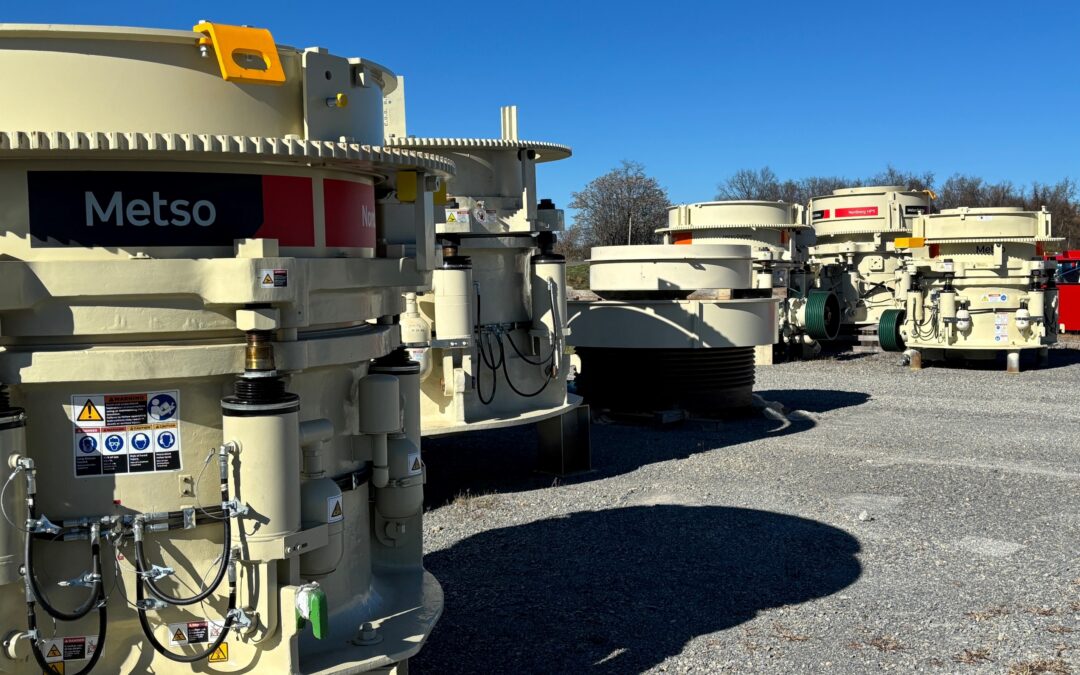
Cone crushers are built to handle demanding crushing applications, but like any heavy equipment, they require regular maintenance and timely repairs to perform at their best. When wear parts are neglected or internal components begin to fail, production can slow, product quality can suffer, and costly downtime can follow.
At Southern Machinery Company, we help producers keep equipment running with dependable crusher parts, service support, and maintenance solutions. Understanding common cone crusher failures and knowing which parts to replace can help protect your operation and extend equipment life.
Why Cone Crusher Failures Happen
Cone crushers operate under constant pressure, vibration, and material load. Over time, wear and stress can impact both internal components and external systems. Failures are often caused by:
- Normal wear from abrasive material
- Poor maintenance practices
- Improper crusher settings
- Contaminated lubrication systems
- Overloading the crusher
- Incorrect feed conditions
- Delayed replacement of worn parts
Routine inspections and proactive parts replacement are the best ways to prevent unexpected shutdowns.
Worn Mantle and Concave Liners
One of the most common cone crusher issues involves worn crushing liners. The mantle and concaves form the crushing chamber and directly affect reduction, throughput, and final product size.
Signs of Worn Cone Crusher Liners
- Reduced production capacity
- Inconsistent gradation
- Higher recirculating loads
- Increased power draw
- Poor particle shape
- Uneven wear patterns
Parts to Replace
- Mantle
- Bowl liner or concaves
- Hardware used during liner installation
Replacing liners at the correct wear point helps maintain performance and protects the crusher frame.
Main Shaft Damage or Excessive Wear
The main shaft is a critical component that supports crushing forces throughout operation. Excessive stress, improper loading, or lubrication issues can lead to shaft damage.
Common Symptoms
- Vibration during operation
- Unusual noise
- Loss of crushing efficiency
- Visible wear during teardown inspections
Parts to Replace
- Main shaft
- Head center components if damaged
- Related bushings and seals
Addressing shaft wear early can prevent more extensive internal damage.
Bushing and Bearing Failures
Bushings and bearings allow smooth movement of key cone crusher components. If lubrication is poor or contaminants enter the system, these parts can fail quickly.
Warning Signs
- Rising operating temperature
- Metal contamination in oil
- Excessive vibration
- Noise during startup or shutdown
Parts to Replace
- Eccentric bushings
- Main frame bushings
- Thrust bearings
- Related seals and lubrication components
Replacing worn bushings on schedule can help avoid catastrophic failures.
Lubrication System Problems
A cone crusher depends on proper lubrication to protect moving parts. Oil flow restrictions, dirty oil, or worn pumps can lead to severe internal damage.
Common Lubrication Failures
- Low oil pressure
- Overheating
- Oil leaks
- Contaminated lubricant
- Pump or filter issues
Parts to Replace
- Oil filters
- Pumps
- Hoses and fittings
- Seals
- Sensors and gauges as needed
Maintaining the lubrication system is one of the most important ways to protect your crusher investment.
Broken Springs or Tramp Relief Components
Many cone crushers use springs or hydraulic tramp relief systems to protect against uncrushable material entering the chamber. These systems can weaken or fail over time.
Signs of Failure
- Frequent nuisance trips
- Inability to maintain crusher setting
- Reduced overload protection
- Visible spring damage or hydraulic leaks
Parts to Replace
- Springs
- Hydraulic cylinders
- Relief valves
- Accumulators
- Hoses and seals
Reliable tramp relief protection helps prevent major internal damage.
Drive System Wear and Power Transmission Issues
Cone crushers rely on motors, couplings, belts, and drive assemblies to transmit power. Wear in these systems can reduce efficiency or cause sudden shutdowns.
Indicators of Drive Problems
- Belt slipping
- Motor overload conditions
- Excessive vibration
- Inconsistent crusher speed
Parts to Replace
- V-belts
- Couplings
- Bearings
- Motor components when necessary
Regular drive inspections can prevent avoidable production losses.
Frame Cracks and Structural Damage
Heavy loads and prolonged vibration can create fatigue cracks in crusher frames or support structures, especially when wear parts are run too long.
What to Watch For
- Visible cracking
- Misalignment
- Persistent vibration
- Fastener loosening
Parts or Repairs Needed
- Structural repair components
- Replacement hardware
- Reinforcement plates where approved
- Worn liners causing excessive load imbalance
Early detection is key to limiting repair costs.
Prevent Cone Crusher Failures With Planned Maintenance
Many common cone crusher failures can be avoided with a preventive maintenance strategy that includes:
- Scheduled inspections
- Oil analysis
- Liner wear tracking
- Vibration monitoring
- Timely replacement of wear parts
- Proper feed and operating practices
Waiting for a failure often results in higher repair costs and longer downtime.
Get the Cone Crusher Parts You Need From Southern Machinery Company
When a cone crusher goes down, fast access to quality replacement parts matters. Southern Machinery Company supports aggregate producers with cone crusher wear parts, mechanical components, and service expertise to help restore production quickly.
Whether you need mantles, concaves, bushings, bearings, seals, or other critical crusher parts, our team can help identify the right solution for your equipment.
Contact Southern Machinery Company today!