
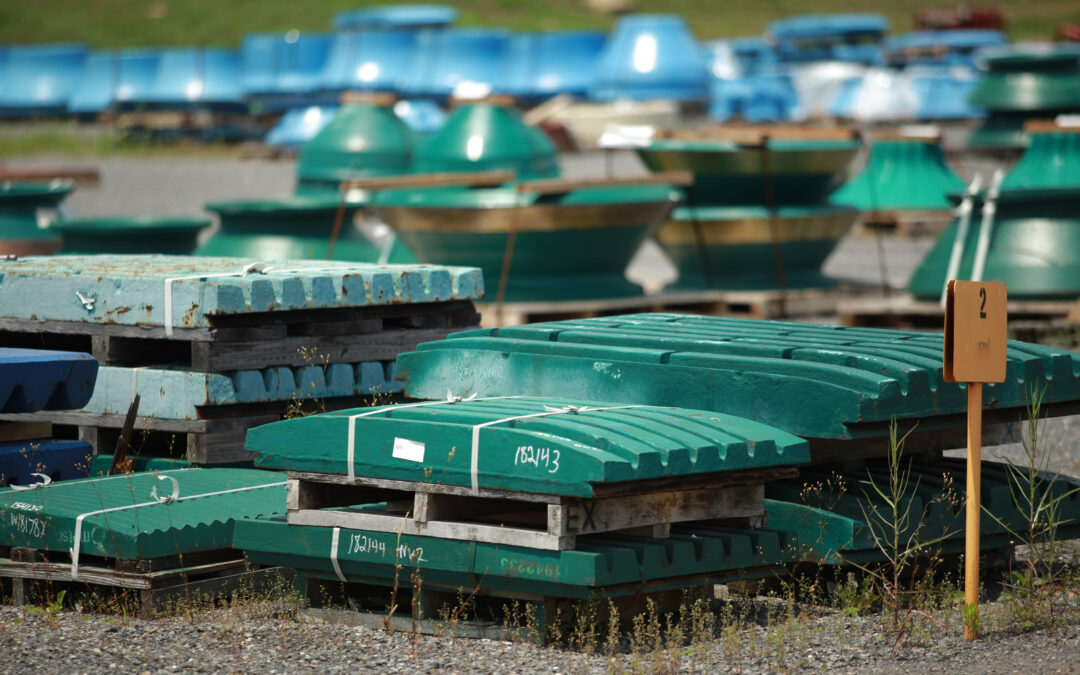
Crusher wear parts are designed to wear. Components like jaw dies, cone liners, mantles, concaves, and blow bars absorb the impact and abrasion of crushing rock to protect the crusher itself. While replacement is inevitable, how quickly those parts wear depends on more than just the material being processed.
From equipment setup to routine maintenance, several factors influence wear rates and overall crusher performance. By following a few best practices, aggregate producers can maximize wear part life, reduce operating costs, and keep production running efficiently.
Start with the Right Wear Parts
Long wear life begins with selecting the right crusher wear parts for your application.
Every operation processes different material, and variables such as abrasiveness, hardness, feed size, and moisture content all affect how quickly wear occurs. Installing wear parts designed for your specific crusher and operating conditions promotes more consistent wear, improves efficiency, and helps avoid premature replacements.
Working with an experienced supplier can help ensure you’re using the right material and profile for your application rather than relying on a one-size-fits-all solution.
Maintain a Consistent Feed
One of the most common causes of premature wear is inconsistent feeding.
An uneven feed can create localized wear on one side of the crushing chamber, reducing the usable life of your wear parts and impacting overall crusher performance. Whenever possible, material should be evenly distributed throughout the chamber to encourage uniform wear and maintain consistent product gradation.
Proper feed size is equally important. Oversized material and overloading place unnecessary stress on both the crusher and its wear components.
Inspect Wear Parts Before They Become a Problem
Waiting until wear parts have completely reached the end of their life can lead to reduced production and increased maintenance costs.
Routine inspections allow operators to monitor wear patterns, identify abnormal wear, and schedule replacements before performance begins to suffer. Uneven wear may indicate feed issues, improper crusher settings, or other operational concerns that can often be corrected before additional damage occurs.
A proactive inspection schedule also makes maintenance planning more predictable and helps minimize unplanned downtime.
Follow a Preventive Maintenance Program
Extending the life of crusher wear parts requires attention to the entire crushing system.
Regular lubrication, equipment inspections, proper crusher settings, and timely maintenance all contribute to longer wear life. A well-maintained crusher operates more efficiently, places less stress on wear components, and helps prevent minor issues from developing into costly repairs.
Preventive maintenance not only protects your wear parts, it helps protect your entire investment.
Invest in Quality Components
While lower-priced wear parts may reduce upfront costs, they don’t always deliver the best long-term value.
High-quality crusher wear parts are engineered to provide consistent performance, reliable fitment, and longer service life. When wear parts last longer and maintain crushing efficiency throughout their service life, operations often experience fewer shutdowns, lower maintenance costs, and a reduced cost per ton.
Partner with Southern Machinery Company
At Southern Machinery Company, we understand that maximizing crusher wear part life starts with choosing the right components and operating your equipment efficiently. Our team works with aggregate producers to supply dependable wear parts, provide knowledgeable support, and help customers keep their crushing operations running at peak performance.
Looking for high-quality crusher wear parts backed by expert support? Contact Southern Machinery Company to learn how we can help maximize equipment performance and extend the life of your wear components.