
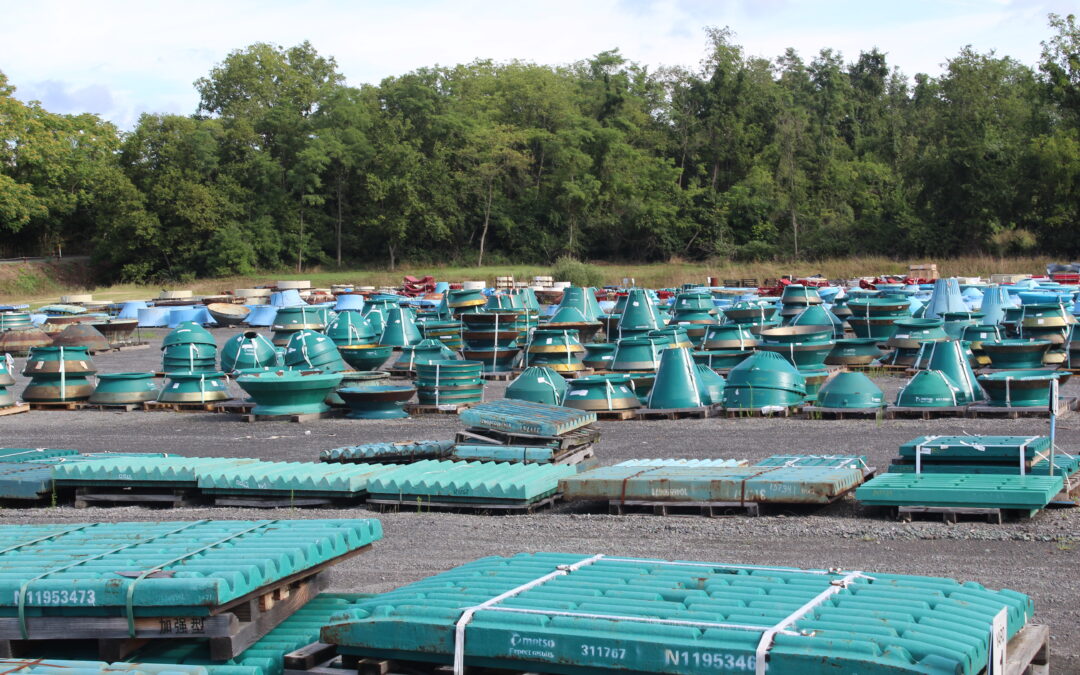
In the aggregate industry, downtime and unplanned maintenance of crushers can dramatically affect productivity, costs and overall profitability. At Southern Machinery Company, we’ve seen firsthand how failing to manage wear parts drives up costs and reduces output. This guide will help aggregate producers optimize crusher wear-part life, improve uptime and get more value from their investment.
Why Wear Parts Matter in Aggregate Crushing
Crusher wear parts, such as jaw plates, mantles, concaves, blow bars and liners, are subject to high impacts, abrasion and constant material flow. If these components wear too quickly or fail unexpectedly, you’ll face:
- Increased maintenance costs due to frequent part changes.
- Unexpected downtime and lost production hours.
- Reduced product quality and fewer tons produced per hour.
- Higher overall cost per ton of aggregate processed.
By proactively extending wear-part life, you keep your crusher in service longer, reduce cost per ton and improve profitability.
- Choose the Right Wear Parts for Your Material
One of the biggest missteps is selecting wear parts that don’t match the feed material, rock hardness, abrasiveness or desired product size. For example:
- Hard, abrasive rock demands thicker liners or higher-alloy materials to resist wear.
- Softer or less abrasive material may allow use of less expensive alloys, avoiding over-engineering and cost.
- Feed size, shape and distribution all affect how wear parts perform.
By working with a trusted supplier like Southern Machinery Company, you can ensure correct wear-part metallurgy and thickness, matching the part to your application from the start.
- Maintain Consistent Feed and Acceptable Operating Parameters
Wear-part life declines rapidly when crushers are fed unevenly or overloaded. Key operating practices include:
- Ensure the feed is controlled and even. Sudden surges or large rocks can cause accelerated wear.
- Check that feed size is within the crusher’s design range; large oversize material increases stress.
- Operate at correct speeds, chamber settings, gap settings and consider the material’s abrasiveness.
- Avoid starvation or choking the crusher chamber; both scenarios lead to abnormal wear patterns.
Proper operation means wear parts are used under optimal conditions, helping them last longer and perform better.
- Establish a Proactive Inspection & Maintenance Program
Even high-quality wear parts will fail sooner if not monitored and maintained. Key steps to include:
- Daily visual inspections: check for cracks, excessive scoring, liner movement, broken tiles or bolts.
- Monitor wear-patterns and keep records of liner thickness, jaw-plate usage, etc.
- Ensure the crusher and wear-part chamber remain free of built-up material or fines that can accelerate wear.
- Schedule regular maintenance, lubrication, tightening and part replacements before failure.
- Control Environmental and Process Factors
Wear is not just a function of crushing. It’s influenced by external factors such as dust, moisture, material stickiness and site conditions. Consider:
- Keeping the crusher clean from material build-up around bearings, chambers and gearboxes. Dust and fines lead to premature wear.
- Addressing moisture or wet material that sticks and causes uneven wear.
- Evaluating material abrasiveness and introducing higher-wear alloys where needed.
- Maintain an Inventory Strategy & Work with a Trusted Supplier

Having the right wear parts on-hand and working with a supplier that supports your operation is key. Southern Machinery Company recommends:
- Keeping critical spare parts in inventory (liners, jaw plates, blow bars) so that replacements can happen quickly.
- Standardizing wear parts across machines when possible, to simplify inventory and reduce cost.
- Using genuine or premium wear parts as cheaper alternatives may fail sooner, costing more in downtime.
- Partnering with a supplier who understands aggregate operations, material conditions and wearpart selection.
This strategic approach reduces backlash from downtime and enables faster turnarounds when parts do need changing.
Conclusion: Maximizing Crusher Throughput & Minimizing Wear Part Costs
In aggregate production, wear part management is strategic asset management. By choosing the right parts, operating your crusher correctly, inspecting proactively, controlling environmental factors and partnering with a trusted supplier like Southern Machinery Company, you’ll:
- Extend wear part life
- Reduce cost per ton processed
- Increase equipment uptime and productivity
- Improve long-term profitability
If you’re ready to optimize your crushers, explore wear-part options or develop a maintenance strategy, our team is here to support your aggregate operation every step of the way. Contact us today!