
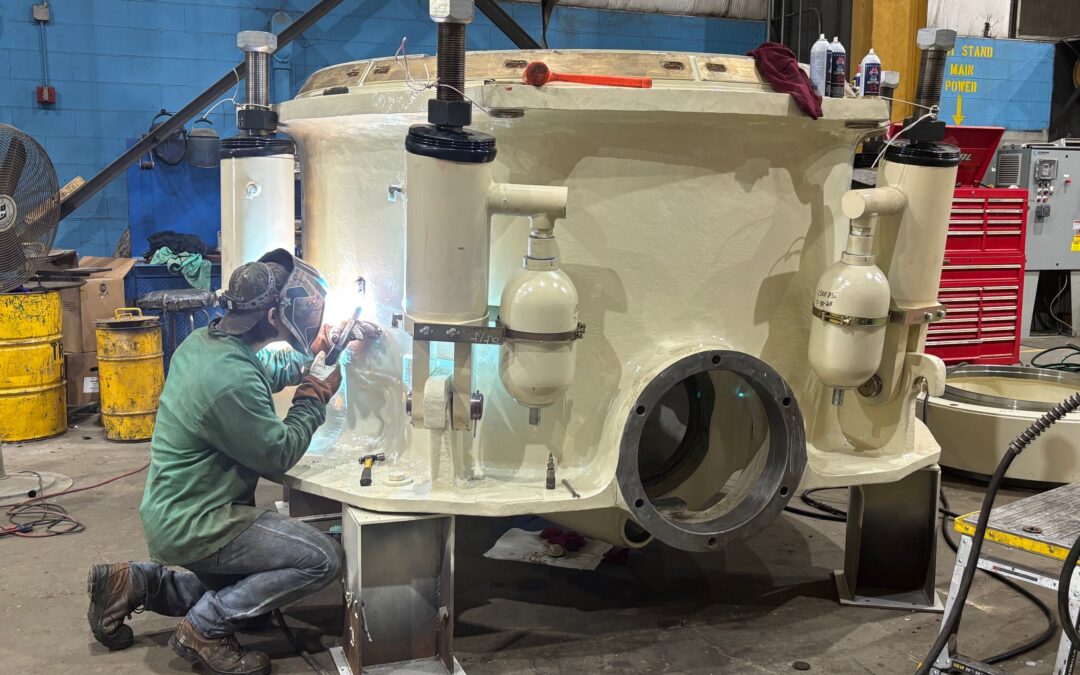
In an aggregate operation, consistent production depends heavily on equipment reliability. Your cone crusher is a critical part of that process, and even equipment engineered for demanding applications requires regular attention to continue performing efficiently.
A proactive maintenance program can help identify developing issues before they result in unexpected downtime or costly repairs. For operations running Metso cone crushers, routine inspections, proper operating practices, and timely service can also help extend component life and maintain consistent production.
At Southern Machinery Company, we understand that crusher maintenance is about more than fixing equipment when something goes wrong. It is about keeping your operation moving. The following maintenance practices can help protect your Metso cone crusher and support reliable performance over the long term.
Make Crusher Wear Inspections Part of Your Routine
Wear is unavoidable in any crushing application, but how that wear is managed can have a major impact on crusher performance.
Mantles, bowl liners, and other crusher wear parts should be inspected regularly to determine how quickly they are wearing and whether the wear pattern is consistent throughout the crushing chamber.
As liners lose their intended profile, crusher performance can begin to change. Operations may experience reduced throughput, inconsistent product gradation, increased power requirements, or additional stress on other components.
Rather than waiting until liners are severely worn, establish inspection intervals based on your application, operating hours, material characteristics, and historical wear life.
It is also important to look at how components are wearing. Uneven or premature wear may indicate another operating condition that needs attention.
Protect the Crusher Through Proper Lubrication
The lubrication system plays a critical role in protecting the internal components of a Metso cone crusher.
Oil does more than simply reduce friction. A properly maintained lubrication system helps control operating temperatures and protects bearings and other critical components from excessive wear.
During routine cone crusher maintenance, check:
- Lubrication oil levels
- Oil temperature
- Oil condition
- Filters
- Evidence of contamination
- Leaks or changes in oil consumption
Contamination from dirt, moisture, or metallic debris can indicate a developing problem and may accelerate component wear if it is not addressed.
Oil and filter changes should follow the appropriate manufacturer recommendations for the specific crusher model and operating conditions. Maintenance teams should also pay attention to changes from the crusher’s normal operating temperatures or lubrication pressures, as trends can sometimes provide an early indication that something requires investigation.
Pay Attention to How Material Enters the Crusher
Crusher maintenance does not stop at the machine itself. Feed conditions can significantly affect both equipment performance and wear-part life.
A cone crusher performs best when material is presented to the crushing chamber consistently and appropriately for the application. Poor feed distribution can contribute to uneven liner wear and reduce crushing efficiency.
Operators should watch for issues such as material consistently entering one side of the chamber, excessive feed segregation, sudden surges, or operating conditions that repeatedly push the crusher outside its intended range.
Maintaining consistent feed conditions can help promote more uniform wear across the crushing chamber while supporting steady production and product quality.
If an operation is experiencing unusually short liner life or uneven wear, evaluating the feed should be part of the troubleshooting process rather than automatically assuming the wear parts themselves are the problem.
Include Hydraulic and Electrical Components in Preventive Inspections
Mechanical wear components often receive the most attention during crusher maintenance, but hydraulic and electrical systems are equally important to reliable operation.
During planned maintenance periods, inspect hydraulic hoses, fittings, connections, cylinders, and related components for leaks, damage, or deterioration.
Electrical components should also be checked for loose connections, damaged wiring, sensor issues, or recurring alarms.
Small problems in these systems can become much larger problems when ignored. A minor leak, deteriorating hose, loose connection, or faulty sensor may be relatively straightforward to correct during scheduled maintenance but can become significantly more disruptive if it contributes to an unexpected shutdown.
Crusher alarms should also be treated as useful diagnostic information. Repeatedly resetting an alarm without identifying its cause can allow an underlying condition to continue developing.
Learn What “Normal” Looks and Sounds Like
Experienced operators and maintenance personnel often recognize equipment problems because something simply seems different.
Changes in vibration, sound, operating temperature, production rate, power draw, or product quality can all provide clues about the condition of a cone crusher.
Establishing normal operating baselines makes these changes easier to recognize.
If a crusher suddenly begins running hotter than usual, producing an unfamiliar sound, requiring more frequent adjustments, or processing less material under otherwise similar conditions, investigate the change rather than waiting for a failure.
Catching a developing issue early can sometimes mean the difference between a planned maintenance repair and a much larger equipment failure.
Use Maintenance Records to Identify Trends
Good recordkeeping can make a preventive maintenance program much more effective.
Document inspections, component replacements, liner changes, oil and filter service, operating hours, recurring alarms, and unusual equipment conditions. Over time, these records provide valuable insight into how the crusher performs in your specific application.
Maintenance history can help teams answer important questions:
- Are liners lasting as long as expected?
- Is one component failing more frequently than it should?
- Are maintenance intervals appropriate?
- Are certain operating conditions associated with premature wear?
- Is downtime becoming more frequent?
- Are the same alarms or operating issues repeatedly occurring?
Using this information can help an operation move away from reactive repairs and toward more predictable crusher maintenance planning.
Plan Maintenance Around Production Whenever Possible
Unexpected downtime rarely occurs at a convenient time.
One of the primary advantages of preventive maintenance is the ability to identify service needs early enough to coordinate repairs with scheduled shutdowns or periods of lower production.
Maintaining an inventory of commonly needed Metso cone crusher parts and wear components can also help reduce delays when planned maintenance is performed.
Each operation should develop its maintenance schedule around the crusher model, application, operating environment, production demands, and manufacturer recommendations rather than relying on a one-size-fits-all maintenance interval.
The Value of Preventive Cone Crusher Maintenance
Preventive maintenance requires time and planning, but the goal is to spend that time on your terms rather than during an unexpected breakdown.
A well-managed Metso cone crusher maintenance program can help:
- Improve equipment reliability
- Reduce unplanned crusher downtime
- Extend wear-part and component life
- Maintain consistent production
- Improve crushing efficiency
- Identify developing problems earlier
- Support more predictable maintenance costs
- Protect the long-term value of crushing equipment
The most effective maintenance programs combine regular inspections with knowledgeable operators, accurate records, proper replacement parts, and experienced service support.
Support Your Metso Cone Crusher with Southern Machinery Company
Keeping crushing equipment productive requires the right combination of maintenance, parts, operating practices, and technical support.
Southern Machinery Company supports aggregate producers with crusher parts, equipment expertise, and service solutions to help keep crushing and screening operations running efficiently. Whether you are preparing for scheduled maintenance, looking for replacement parts, troubleshooting a performance issue, or planning a repair, our team can help.
Taking a proactive approach today can help reduce unexpected problems tomorrow and keep your operation focused on what matters most: production.
Contact Southern Machinery Company for assistance.